
Your garage door is one of the largest and most frequently used moving systems in your home, and it needs to operate smoothly every day to support both safety and convenience. The door itself, along with the garage door opener, relies on consistent maintenance to continue functioning as intended. Unfortunately, many homeowners overlook this upkeep until a problem appears, which often results in unexpected breakdowns and more extensive repairs.
In this guide, you’ll learn when regular garage door maintenance should be scheduled and which factors can influence that timing. You’ll also gain a clearer understanding of what a professional maintenance service typically addresses and why choosing the right moment for an inspection matters. Staying ahead of maintenance helps keep your garage door reliable, safe, and easy to operate, while supporting its long-term performance.
Why Garage Door Maintenance Matters
Neglecting garage door maintenance can lead to more than minor inconveniences. Over time, everyday use causes components to wear down, which can affect both how the door operates and how safe it is. Early signs of wear are often easy to overlook, but when they’re ignored, small issues tend to grow into more serious problems. What could have been addressed early may eventually result in unexpected breakdowns and more extensive repairs. Jerky movement or unusual noises are not just irritations; they are clear signals that the system isn’t functioning as it should.
Regular upkeep plays an important role in keeping your garage door operating smoothly. A consistent maintenance plan helps ensure that all parts remain in good condition and that the door continues to open and close with ease. It also allows potential concerns to be identified early, before they develop into larger issues. This approach not only helps reduce the likelihood of costly repairs but also provides reassurance that your garage door will operate safely and reliably whenever you need it.
For a deeper look at why staying on schedule matters, explore our related blog, “What Risks Come From Delayed Garage Door Maintenance?”
How Preventive Maintenance Helps Keep Your Garage Door Safe and Reliable
Preventive maintenance is essential for maintaining the safety of your garage door system. Many of its components, including springs and cables, operate under significant tension, and problems in these areas can pose real risks if left unaddressed. A garage door safety check focuses on inspecting these critical parts for signs of wear or damage, allowing issues to be resolved before they lead to failure. Routine maintenance also helps ensure that safety features, such as the auto-reverse function, continue to work properly, protecting both people and property.
Reliability is another key benefit of preventive maintenance. A garage door that fails during severe weather or at an inconvenient moment can quickly disrupt your day. Regular service reduces the chances of sudden malfunctions by keeping components secure, aligned, and functioning as intended. During maintenance, technicians typically address concerns such as loose hardware and alignment issues, which help the door operate consistently and with less strain on the system.
Ultimately, routine preventive maintenance offers peace of mind. Knowing that a professional has carefully evaluated the garage door system allows you to trust its performance and safety. This proactive approach helps avoid unexpected repairs while supporting dependable operation over time, making it a practical choice for long-term care.
The Effect of Routine Maintenance on Everyday Garage Door Performance
Routine garage door maintenance has a noticeable impact on daily performance. When the system is properly maintained, the door opens and closes smoothly, without hesitation or excessive noise. Grinding, squeaking, or rattling sounds often point to minor issues within the moving parts, and these problems tend to worsen if they aren’t addressed. Regular maintenance helps resolve these concerns early, preventing them from turning into larger disruptions.
Lubrication is a key part of maintaining smooth operation. Components such as rollers, hinges, and springs rely on proper lubrication to move efficiently and avoid unnecessary wear. Without it, friction increases, which can shorten the lifespan of these parts and make the door harder to operate. A routine tune-up ensures that these elements are properly cared for, allowing the system to run quietly and consistently.
By addressing small issues before they escalate, routine maintenance helps prevent unexpected breakdowns that can interrupt your day, including problems that may eventually require broken spring replacement. Keeping the garage door properly aligned and its components in good condition supports dependable operation and extends the life of the system. The result is a garage door you can rely on daily, with smoother performance and fewer surprises over the long term.
When Garage Door Maintenance Should Be Performed
Choosing the right time for garage door maintenance isn’t about selecting a random date on the calendar. The ideal schedule depends on several factors, including climate, usage, and the age of the door itself. For many homeowners, an annual inspection provides a solid baseline, but some systems may require attention more often, especially when daily use or environmental conditions place additional strain on moving parts.
Paying attention to how your garage door operates can also help determine when maintenance is needed. New or unusual noises, slower movement, or resistance while opening and closing are all signs that the system may need professional attention. Addressing these concerns early helps prevent minor issues from developing into larger problems. The sections below explain how climate and usage patterns can influence when garage door maintenance is most effective.
For more insight into everyday reliability, take a moment to read our related blog, “How Garage Door Maintenance Supports Daily Use?”
Seasonal and Climate Factors That Affect Maintenance Timing
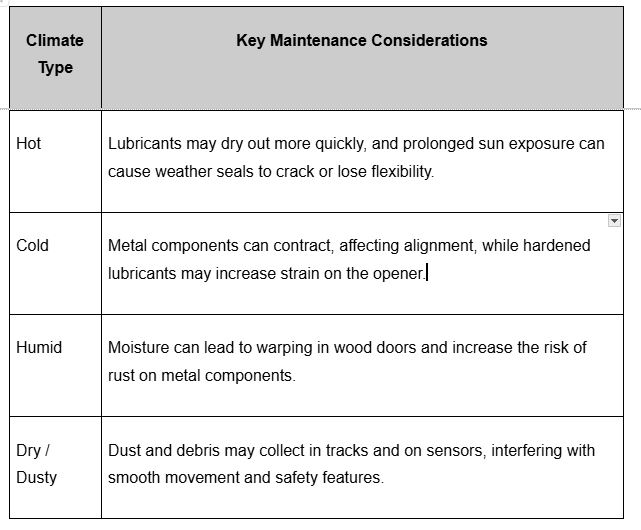
Local weather conditions play a major role in how your garage door performs throughout the year. Extreme temperatures, moisture, and airborne debris can accelerate wear on various components. Prolonged heat may cause lubricants to dry out more quickly, while cold weather can make metal parts contract and weather seals stiffen. Scheduling maintenance ahead of the most demanding season helps prepare the system for these conditions and reduces the risk of unexpected issues.
Certain door materials are more sensitive to climate-related stress. Wood doors, for example, can absorb moisture in humid environments, increasing the risk of warping or deterioration if not properly maintained. In coastal or dusty regions, debris can build up in tracks and around moving parts, creating resistance and placing added strain on the opener. Regular inspection and cleaning help preserve smooth operation and support long-term performance. Well-maintained weather seals also contribute to better energy efficiency by limiting drafts and temperature changes inside the garage.
Because no two climates are the same, adjusting maintenance timing based on local conditions is an effective way to keep a garage door operating reliably throughout the year.
How Usage Patterns Influence the Need for a Tune-Up or Inspection
The frequency with which a garage door is used has a direct impact on how often it should be maintained. Homes with larger families or multiple drivers typically rely on the garage door many times each day, which increases wear on components such as springs, rollers, cables, and the opener itself. In contrast, doors that are opened only occasionally experience far less stress over time.
Frequent use places additional demands on the entire system. The opener motor works harder, tracks endure constant vibration, and hardware can gradually loosen under repeated movement. For this reason, heavily used garage doors often benefit from more frequent inspections. Many homeowners choose to schedule maintenance twice a year in these situations, allowing potential issues to be identified and addressed before they affect performance.
When a garage door plays a central role in daily routines, proactive maintenance becomes especially important. Regular tune-ups help keep the system balanced, aligned, and operating smoothly, which can reduce the likelihood of unexpected issues that may lead to garage door repair. This approach not only supports consistent performance but also helps ensure the door remains dependable when it’s needed most.
What’s Included in a Garage Door Maintenance Inspection
When you schedule a garage door maintenance inspection with a professional service, the entire system is evaluated to ensure it is operating safely and reliably. The technician follows a detailed maintenance checklist that covers both structural and mechanical components, focusing on how well each part is performing under normal use. This process isn’t limited to addressing visible problems; it’s designed to uncover early signs of wear or stress before they develop into more serious issues.
Rather than a quick visual scan, a proper inspection involves a thorough review of moving parts, safety features, and overall operation. The technician closely examines how the door functions, tests key safety systems, and addresses minor concerns to help maintain smooth, dependable performance. The sections below outline the primary components reviewed during an inspection and explain how safety and performance are evaluated as part of routine garage door maintenance.
To learn more about the parts that require consistent attention, explore our related blog, “What Components Need Regular Garage Door Maintenance?”
Key Components Reviewed During a Standard Maintenance Checklist
A comprehensive garage door maintenance checklist ensures that every critical part of the system is examined for proper operation and safety. Moving components receive special attention, as they experience the most wear over time. Rollers that guide the door along its tracks, hinges that allow the panels to bend, and springs that support the door’s weight are all carefully inspected for signs of fatigue, damage, or corrosion.
Door balance is another essential part of the inspection process, as an unbalanced door places unnecessary strain on the opener and can lead to premature failure if left uncorrected, sometimes requiring emergency service. The technician checks the door’s balance and adjusts spring tension when needed to restore proper alignment. Lubrication is also applied to appropriate components to reduce friction, support quiet operation, and promote smoother movement throughout the system.
During a standard garage door maintenance inspection, technicians typically review the following key areas:
- Springs and cables: Inspected for rust, wear, fraying, or stretching, as these components operate under significant tension.
- Rollers and hinges: Checked for cracks, damage, or weakened brackets that could affect smooth movement.
- Tracks: Examined for bends, obstructions, and proper alignment to ensure the door travels evenly.
- Safety sensors: Tested to confirm proper positioning and reliable operation.
This detailed inspection process helps maintain consistent performance while supporting the overall safety and longevity of the garage door system.
Safety and Performance Checks Completed During an Inspection
During a garage door service visit, a professional evaluates the system as a whole, with careful attention given to both safety and performance. Critical features such as the auto-reverse function are tested to ensure the door responds immediately when it meets resistance, while the photo-eye sensors are checked to confirm the door reverses as soon as an obstruction is detected. The technician also observes how the door moves during operation, watching for uneven motion, shaking, or unusual sounds that could indicate underlying issues. Balance is verified to prevent unnecessary strain on the opener, and the chain or belt is inspected for proper tension and smooth movement, with lubrication applied where needed to reduce resistance and support efficient operation. Because garage door systems involve high-tension components and precise adjustments, these evaluations are best handled by a trained professional who has the tools and experience to make accurate corrections and ensure the door operates safely and reliably for everyone in the home.
Regular garage door maintenance plays an important role in keeping the system safe, reliable, and operating the way it should. Understanding when your garage door should be checked, along with the factors that influence maintenance timing, makes it easier to care for the entire system and recognize how each component works together. By staying attentive to its condition and addressing concerns as they arise, you help support smoother operation and extend the life of the door. Scheduling a professional inspection can be a practical step toward keeping your garage door in strong working condition over the long term.
When it comes to dependable service and professional care, JT’s Overhead Doors is a trusted choice for homeowners who value quality and reliability. Our experienced team understands the importance of timely maintenance and thorough inspections, helping garage door systems perform safely and consistently year after year. If you’re ready to take the next step in protecting your garage door, contact us today or give us a call to schedule an inspection and keep your system operating at its best.
Frequently Asked Questions
How often should garage door maintenance be scheduled?
For most homeowners, scheduling garage door maintenance once a year is usually sufficient to keep the system operating properly. Homes with frequent daily use may benefit from more frequent service, especially if the door is opened and closed multiple times each day. Maintenance should also be scheduled sooner if the door begins making unusual noises or operating unevenly, as these changes often signal developing issues that should be addressed promptly.
Does the time of year affect when a garage door inspection is needed in Mesa, Arizona?
Yes, seasonal conditions in Mesa can influence when a garage door inspection is most beneficial. High summer temperatures can dry out lubricated components and cause weather seals to deteriorate, while dust and debris may build up in tracks and moving parts. Scheduling an inspection before extreme heat or after seasonal weather changes allows potential issues to be addressed before they lead to operational problems.
Why is preventive garage door maintenance important for safety?
Preventive garage door maintenance helps ensure that safety features continue to function as intended while reducing the risk of sudden failures. Regular inspections allow worn or stressed components to be identified early, helping prevent breakdowns that could cause injury or property damage. Keeping safety systems properly adjusted also supports reliable operation and long-term peace of mind.
What does a garage door tune-up include?
A garage door tune-up involves a thorough review of the system’s moving and safety components to ensure everything operates as it should. This process typically includes checking door balance, tightening hardware, inspecting springs and cables, testing safety sensors, and confirming that the opener runs smoothly. Proper lubrication is also applied where needed to reduce friction and support quiet, efficient movement, an approach commonly outlined by Bob Vila as part of maintaining reliable garage door performance.
What happens if garage door maintenance is skipped for too long?
Skipping garage door maintenance allows minor wear to progress into more serious problems over time. Components may become strained or fail unexpectedly, which can lead to operational issues or system shutdowns. In more severe cases, neglected parts can create safety hazards, making regular maintenance an important part of long-term system care.
Which parts of a garage door system are most affected by missed maintenance?
The parts most affected by missed maintenance are those that handle constant movement and tension. Springs, cables, rollers, and hinges tend to wear faster without regular inspection and lubrication. The opener may also experience added strain when other components are not functioning properly, which can shorten its lifespan and affect performance.
How does frequent use impact garage door maintenance needs?
Garage doors that are used frequently experience higher levels of wear across all moving parts. Increased daily operation places added stress on springs, rollers, and the opener, making regular maintenance more important. Systems with heavy use often benefit from closer monitoring to ensure alignment, balance, and smooth operation are maintained.
What’s the difference between a garage door inspection and routine garage door maintenance?
A garage door inspection focuses on identifying existing or developing issues within the system, while routine maintenance goes a step further by addressing those concerns. Maintenance includes adjustments, lubrication, and tightening of components to support continued performance. Inspections highlight potential problems, while maintenance helps prevent them from affecting operation.
How does preventive garage door maintenance affect long-term performance?
Preventive maintenance plays a key role in supporting long-term performance by reducing strain on components and addressing wear before it leads to failure. Maintaining proper balance and lubrication supports smooth operation and helps limit the need for major repairs as usage accumulates over time. As noted by Speedway Media, because a garage door functions as a complex mechanical system, consistent care is essential for extending its service life while maintaining safe and dependable operation.
When should a garage door opener be checked as part of regular maintenance?
The garage door opener should be evaluated during every routine maintenance visit, which is typically scheduled at least once a year. During this check, the opener’s movement, force settings, and safety reversal system are reviewed to ensure proper operation. Regular evaluation helps confirm that the opener continues to function safely and efficiently as part of the overall system.