

If your garage door suddenly sounds like it is dragging, grinding, or refusing to move the way it should, there is a good chance the rollers are the problem. Garage door rollers may be small, but they carry a lot of responsibility by guiding the door smoothly along the track every time it opens or closes. When a roller slips, cracks, or comes loose, the entire system is affected, often leading to the need for immediate garage door repair. This is a common issue for homeowners in Mesa, AZ, where extreme heat and frequent use put extra stress on garage door components.
Most roller problems begin with small warning signs such as unusual noises, uneven movement, or a door that feels heavier than normal. Recognizing these early symptoms can help you avoid more serious damage and costly garage door repair.
The Rollers Are Old and Worn Out
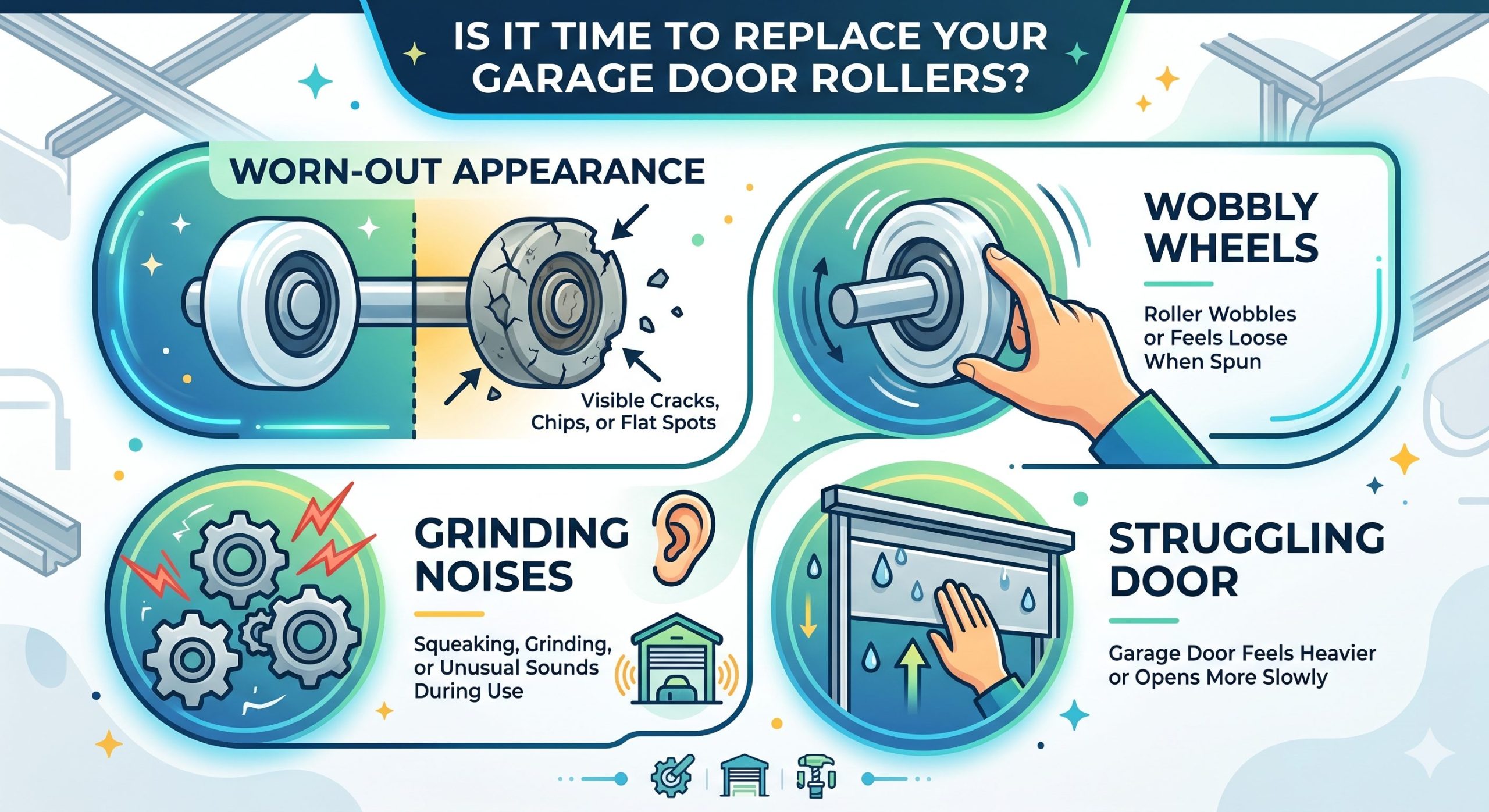
One of the most straightforward reasons rollers fall off is that they are simply past their useful life. Most standard nylon or steel rollers are built to handle somewhere between 10,000 and 20,000 cycles. If your garage door opens and closes four times a day, that adds up faster than most homeowners expect.
What worn rollers look like:
- The wheel looks cracked, chipped, or has flat spots on the surface
- The roller wobbles when you spin it by hand
- You hear grinding or squeaking sounds during operation
- The door feels heavier or slower than usual
What you can check: Walk along the side of your garage door and take a close look at each roller. You are looking for visible cracks, missing chunks, or wheels that look uneven. If the rollers are clearly worn, replacement is usually the right call rather than continuing to run the door on damaged hardware.
For a deeper look at what happens when you leave these issues unaddressed, read What Happens If You Ignore a Fallen Garage Door Roller? before deciding to put off repairs.

The Track Is Bent, Misaligned, or Dirty
Even if your rollers are in good shape, a damaged or dirty track can force them right out of position. The track is the channel that guides the rollers as the door moves. When it is bent even slightly, the roller hits a wall and either jams or pops out.
Common track problems that cause rollers to fall off:
- A dent or bend from an accidental impact, like a car bumping the track
- Gaps between the track sections where rollers can get caught
- Loose track brackets that allow the track to shift during operation
- Dirt, debris, or hardened old lubricant clogging the channel
What you can check: Run a flashlight along the full length of both vertical and horizontal tracks. Look for visible bends, gaps, or debris buildup. If the track looks clean and straight, gently check whether the mounting brackets feel tight against the wall. Loose brackets are an easy fix for a professional and can prevent a much larger problem.
The Roller Brackets Are Loose or Broken
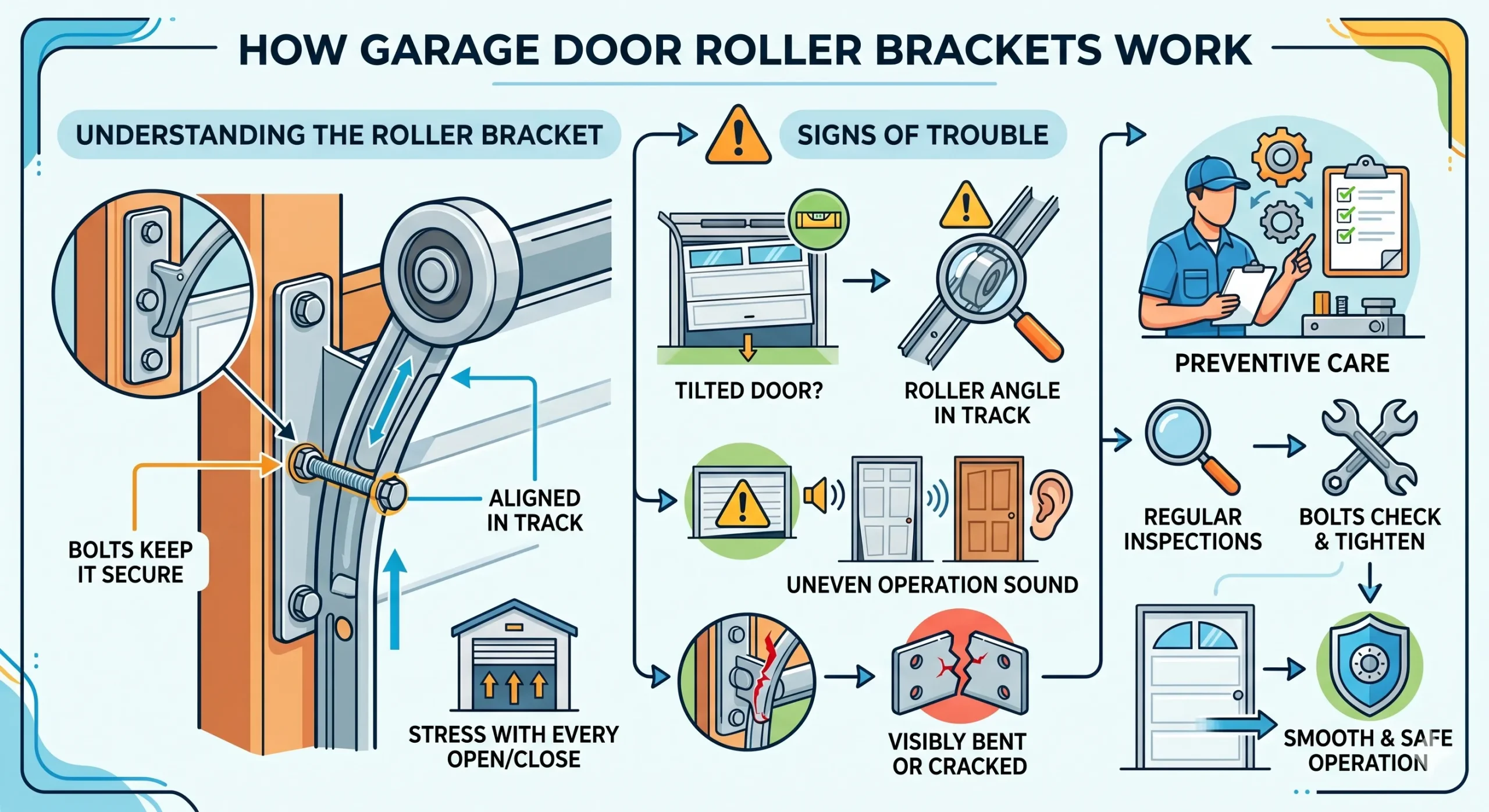
Roller brackets are the metal pieces that hold each roller stem in place along the door, bolted directly to the panels to keep everything aligned within the track. When a bracket bends, cracks, or its bolts loosen over time, the roller can slip out of position, often leading to the need for garage door repair. This issue is especially common in older doors or in homes where the system is used frequently, since every open and close cycle adds vibration and stress to the hardware. Over time, that constant movement weakens the brackets and surrounding components, making regular garage door service an important part of preventing unexpected failures and maintaining smooth, safe operation.
Signs of bracket trouble:
- The door looks slightly tilted or uneven when it opens
- You can see a roller sitting at an angle rather than straight in the track
- One side of the door sounds different from the other during operation
- A bracket looks visibly bent or cracked on inspection
The Springs Are Unbalanced or Failing
This one surprises a lot of homeowners. The torsion or extension springs on your garage door are responsible for counterbalancing the door’s weight. When they are properly calibrated, the door feels light and moves smoothly. When they start to wear out or lose tension, the door becomes unbalanced.
An unbalanced door does not open and close evenly. One side rises faster or higher than the other. That uneven movement puts enormous sideways pressure on the rollers, forcing them to work at angles they were not designed for. Over time, that pressure pulls them off the track.
How to check for spring imbalance: Disconnect your garage door opener and manually lift the door to about waist height, then let go. A balanced door should stay in place. If it falls or rises on its own, the springs are unbalanced and the door is putting excess stress on every component, including the rollers.
Poor Lubrication Is Causing Friction and Wear
Rollers need proper lubrication to move freely through the track. Without it, friction builds up between the wheel and the track surface. That friction slows the roller down, causes uneven wear, and eventually damages both the roller and the track itself.
A lot of homeowners skip lubrication entirely or use the wrong product. Using WD-40, for example, is a very common mistake. WD-40 is a solvent and cleaner, not a long-term lubricant. It can actually strip away existing lubricant and leave the rollers running dry.
What to use: A silicone-based spray or a lithium grease product designed specifically for garage doors is the right choice. These products stay in place through temperature changes and do not attract dirt the way thicker greases can.
Where to apply the lubricant:
- The roller wheels and stems
- The inside of both vertical tracks (not the horizontal track)
- The hinges along the door panels
- The torsion spring (lightly)
How often: Most garage door professionals recommend lubricating the moving parts every six months. In Mesa’s heat, you may want to check lubrication more frequently since high temperatures cause lubricant to thin out and evaporate faster.
The Wrong Rollers Were Installed
Not all garage door rollers are the same. They come in different sizes, materials, and load ratings. Installing the wrong type of roller for your specific door can lead to premature failure, poor performance, and eventually rollers coming loose or falling off.
Common roller mismatch problems:
- Using a roller stem that is too short or too long for the bracket
- Installing a roller wheel with a diameter that does not fit the track width properly
- Using basic steel rollers on a heavy door that requires heavy-duty nylon rollers
- Mixing old and new roller types after a partial replacement
Selecting correct hardware components is critical, as improper installation can compromise system safety and long-term performance according to industry maintenance standards.
Physical Impact or Sudden Shock to the Door
Sometimes the cause is straightforward: something hit the door. A vehicle bumping into the door, a strong wind forcing it open or shut too fast, or a child playing near the bottom panel can all send enough force through the door to knock a roller out of the track.
In these situations, you might see the roller pop out immediately, or the impact may bend a bracket or dent the track just enough that the roller begins to work loose over the next few days of operation.
What to check after an impact:
- Inspect every roller along both sides of the door
- Look at the track for any new bends or dents
- Check all visible brackets for bending or separation from the panel
- Test the door manually before using the opener
Infrequent Maintenance and Lack of Regular Inspections
A lot of roller failures are not caused by one dramatic event. They build up slowly over time because the door never gets looked at. Homeowners use their garage door multiple times a day without ever giving it a second thought until something breaks.
Routine inspections catch small problems before they become expensive ones. A roller that is starting to crack, a bracket bolt that is working loose, a track that is beginning to collect debris. These are all fixable at a low cost if caught early. Left alone, they lead to rollers falling off, doors coming off track, and in some cases, complete door failure.
A simple maintenance checklist every homeowner can follow:
- Visually inspect rollers and tracks every three to six months
- Listen for new sounds during operation and take them seriously
- Test the door balance manually once or twice a year
- Keep the tracks clear of dirt and debris
- Lubricate moving parts on a regular schedule
Routine garage door inspections are widely recommended by consumer safety and home maintenance experts to prevent mechanical failure and extend system lifespan.
To learn more about keeping your rollers in good shape long term, check out How to Keep Garage Door Rollers From Falling Off for a full breakdown of preventive steps you can take as a homeowner.

Extreme Weather and Temperature Shifts in Mesa, AZ
Living in Mesa means your garage door deals with heat levels that most systems were not specifically designed for. Summer temperatures regularly push past 110 degrees Fahrenheit, and the combination of intense heat, UV exposure, and rapid temperature swings between day and night puts real stress on garage door hardware.
How Mesa’s climate affects rollers:
- Heat causes metal components to expand, which can tighten the fit between rollers and track and increase friction
- Nylon rollers can warp or soften under prolonged heat exposure
- UV rays degrade plastic and nylon materials over time
- Temperature drops at night cause contraction, which can loosen hardware that was tight during the day
When to Call a Professional
Some things you can check and monitor on your own. Other things require a trained technician or emergency service. Here is a clear breakdown:
You can do yourself:
- Visual inspection of rollers, tracks, and brackets
- Cleaning debris out of the tracks
- Applying lubricant to rollers, hinges, and the spring
Always call a professional for:
- Any spring adjustment or replacement
- Replacing bent or broken brackets
- Realigning or repairing a bent track
- Replacing rollers if you are not sure of the correct type
- Any situation where the door is completely off track
For a full look at what to expect as your rollers age and when replacement makes more sense than repair, read Signs It’s Time to Replace Your Garage Door Rollers.
Keeping Your Garage Door Running Right in Mesa, AZ
Garage door rollers fall off for a lot of different reasons, and most of them are preventable with regular garage door service. Common causes include worn hardware, dirty or misaligned tracks, unbalanced springs, and the added stress that comes from living in a hot desert climate like Mesa, AZ. Catching these issues early always leads to a faster and more affordable garage door repair, helping you avoid bigger damage to the system.
When you are ready for a professional inspection or repair, JT’s Overhead Doors provides reliable garage door service for homeowners in Mesa, AZ. Our team understands what the local climate does to garage door systems and will make sure your door is operating safely and correctly. Contact us today or give us a call to schedule a service visit.