


Most garage door roller problems do not happen suddenly. They develop gradually over weeks and months, leaving behind subtle signs that are easy to miss without close attention. A faint squeak during movement. A slight hesitation along the track. By the time a roller comes loose, the conditions leading to the issue have usually been building for quite some time.
The good news is that keeping your rollers on track is not complicated. It does not require special tools or professional training for most of the steps. What it does require is consistency and knowing what to look for before a small issue becomes a garage door service call.
Inspect Your Rollers Every Three to Six Months
The single most effective thing a homeowner can do to prevent roller failure is also the simplest: look at them regularly. Rollers that are failing give off visible signals well before they fall off. Catching those signals early means the garage door repair stays small and prevents more serious damage to the system.
What to look for during a roller inspection:
- Cracks, chips, or flat spots on the roller wheel surface
- A wheel that wobbles or feels loose when gently moved by hand
- Rust or corrosion on the stem or wheel, especially on steel rollers
- A roller that sits at an angle in the track rather than sitting straight
- Any roller where the stem appears bent or is not sitting flush in the bracket
If your garage door keeps acting up, read What Causes Garage Door Rollers to Fall Off? to uncover the hidden reasons behind it.
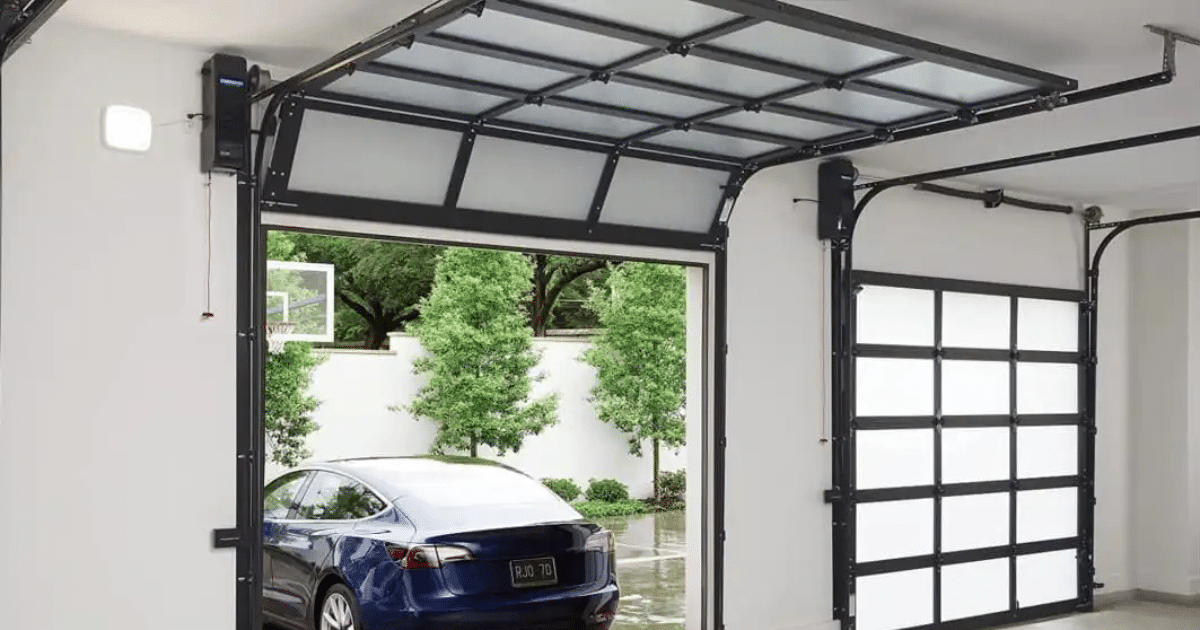
Keep the Tracks Clean and Clear
Rollers do not operate in isolation. They move through a track, and the condition of that track directly affects how long the rollers last. A track that is clogged with dirt, dust, or old dried lubricant forces the rollers to work harder with every cycle. That added friction shortens roller life and increases the chance of a roller binding and popping out of the track.
How to clean garage door tracks properly:
- Use a dry cloth or a stiff-bristled brush to wipe out the inside of both vertical track sections
- Remove any visible debris, cobwebs, or buildup from the channel
- For stubborn residue, a cloth dampened with a small amount of household cleaner works well, but make sure the track is dry before operating the door
- Do not use a pressure washer or soak the track with liquid, as this can push water into the bracket hardware and cause rust
What not to put in the tracks:
Contrary to common belief, the tracks themselves should not be lubricated. Lubricant inside the track collects dust and debris, which creates exactly the kind of buildup you are trying to avoid. The lubrication goes on the rollers and other moving parts, not the track channel itself.
Lubricate the Right Parts the Right Way
Proper lubrication is one of the most misunderstood parts of garage door maintenance. Homeowners either skip it entirely, apply it to the wrong parts, or use the wrong product. Any of these mistakes can accelerate roller wear instead of preventing it.
The right lubricant to use:
A silicone-based spray or white lithium grease formulated for garage doors is the correct choice. These products stay in place through temperature changes, do not attract dirt the way heavier greases can, and protect metal and nylon components without degrading them.
Avoid WD-40. It is a cleaner and water displacer, not a long-term lubricant. It can actually strip away existing protection and leave your rollers running with no lubrication at all within a short period.
Where to apply lubricant:
- Roller wheels and stems, applying a thin, even coat
- Hinges along the door panels where they flex during operation
- The torsion spring along the top of the door opening, applied lightly
- The bearing plates on either side of the torsion spring
- The lock mechanism if the door has a manual lock
Where not to apply lubricant:
- Inside the track channel
- The bottom weatherstripping or rubber seal
- The exterior of the door panels
How often to lubricate:
Every six months is the standard recommendation for most climates. In Mesa, the combination of heat, dust, and intense UV exposure means lubricants thin out and degrade faster than in cooler regions. Checking lubrication every four months and reapplying when parts feel dry or sound rough is a smart adjustment for local conditions.
Check the Track Alignment and Mounting Hardware
A roller can only stay in the track if the track is straight and properly secured to the wall. Over time, the brackets that mount the track to the garage wall can loosen from vibration, and the track itself can shift just enough to create problems for the rollers traveling through it.
How to check track alignment:
- Stand at one end of the door and sight down the length of the vertical track. It should look straight with no visible curves or bends.
- Check that the track is plumb. A small level held against the vertical section will confirm whether it is running straight up and down.
- Look at the gap between the track and the door edge. It should be consistent along the full height of the door, typically around a quarter of an inch.
- If the gap is wider in some spots than others, the track may have shifted.
Checking the mounting brackets:
- Grip each bracket and try to move it gently. It should feel solid with no play.
- Look at the lag bolts or screws securing the brackets to the wall. If any look loose or stripped, they need to be tightened or replaced.
- Check for cracks in the wall around bracket mounting points, which can indicate that the anchor points are no longer holding firmly.
Test the Door Balance Regularly
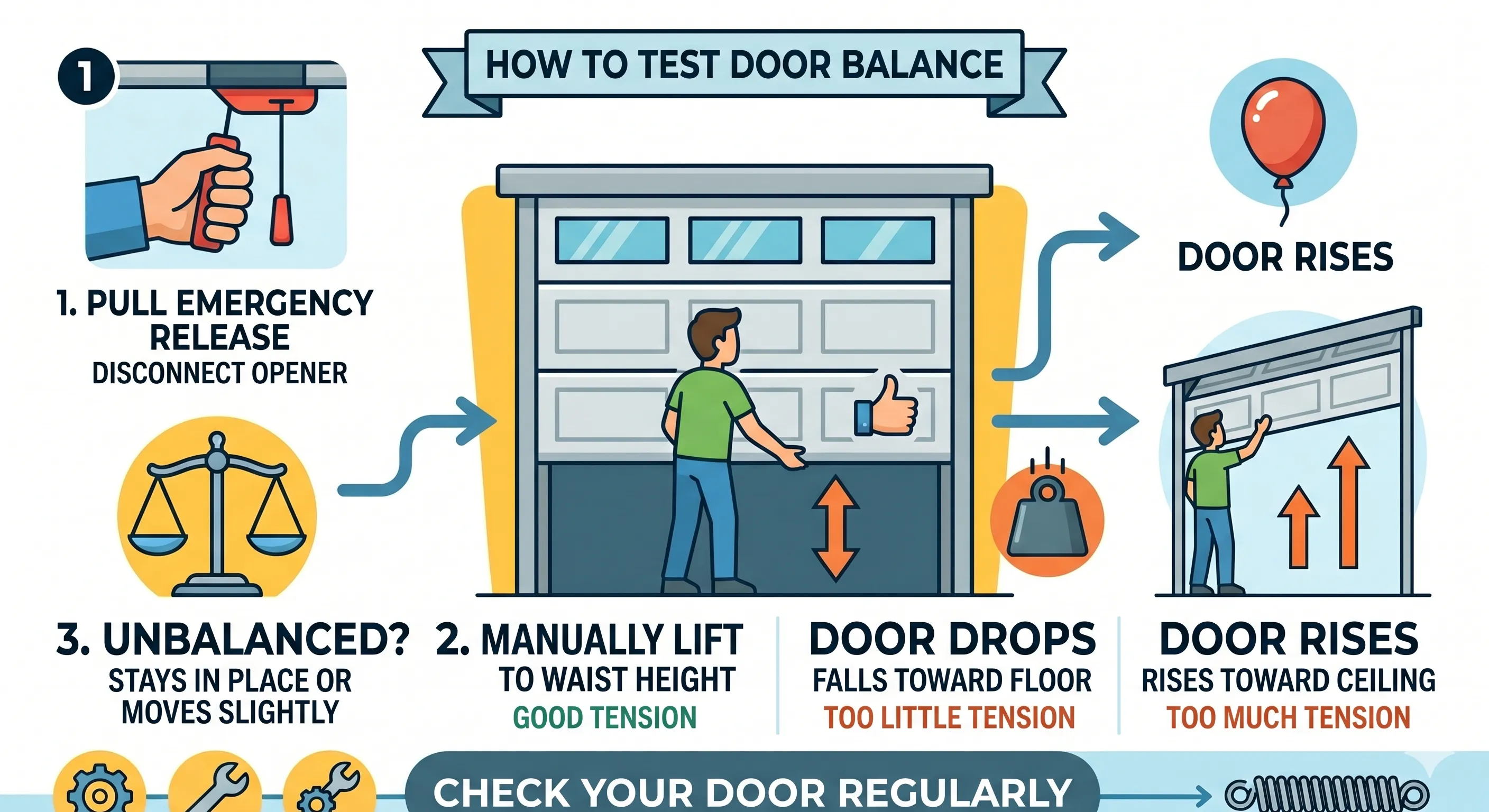
An unbalanced garage door is one of the leading causes of premature roller failure, and most homeowners have no idea their door is out of balance until something breaks. Testing the balance takes less than a minute and should be part of every homeowner’s routine maintenance.
How to test door balance:
- Disconnect the garage door opener by pulling the emergency release cord hanging from the opener rail
- Manually lift the door to approximately waist height, then let go gently
- A properly balanced door will stay in place or move only slightly
- If the door drops toward the floor, the springs have too little tension
- If the door rises toward the ceiling on its own, the springs have too much tension
Replace Rollers Before They Fail, Not After
One of the most practical things a homeowner can do is treat roller replacement as scheduled maintenance rather than emergency service or reactive garage door repair. Rollers have a predictable service life, and replacing them on a schedule helps prevent sudden failure that can lead to track damage, panel stress, and opener strain.
Typical roller lifespans by material:
- Standard steel rollers: 10,000 to 15,000 cycles, often 5 to 8 years with average use
- Nylon rollers with unsealed bearings: 10,000 to 15,000 cycles
- Nylon rollers with sealed ball bearings: up to 20,000 cycles or more, often 10 to 15 years
If you are already seeing signs that your rollers are reaching the end of their useful life, Signs It’s Time to Replace Your Garage Door Rollers gives you a detailed breakdown of what to look for and when replacement makes more sense than waiting.
Pay Attention to New Sounds and Changes in Operation
Your garage door communicates when something is wrong. Most of the time, it does it through sound and feel before anything becomes visually obvious. Developing the habit of actually listening to your door during operation is one of the simplest and most effective forms of preventive maintenance.
Sounds that should prompt a closer look:
- Grinding or scraping sounds, which often indicate a dry or damaged roller rubbing against the track
- Squeaking or squealing, which usually points to a lubrication issue on the rollers or hinges
- Popping or clicking sounds during travel, which can signal a roller wheel that has developed a flat spot
- A thumping sound at a consistent point in the travel, which may indicate a roller catching on a debris buildup or a track imperfection
Changes in operation that deserve attention:
- The door hesitates or slows at a certain point during opening or closing
- The opener sounds like it is working harder than usual
- The door does not sit flush with the floor seal when fully closed
- One side of the door looks or feels different from the other during operation
Common garage door troubleshooting guides emphasize that changes in sound or motion are often early indicators of mechanical wear in rollers, hinges, or tracks.
Do Not Ignore Minor Damage After an Impact
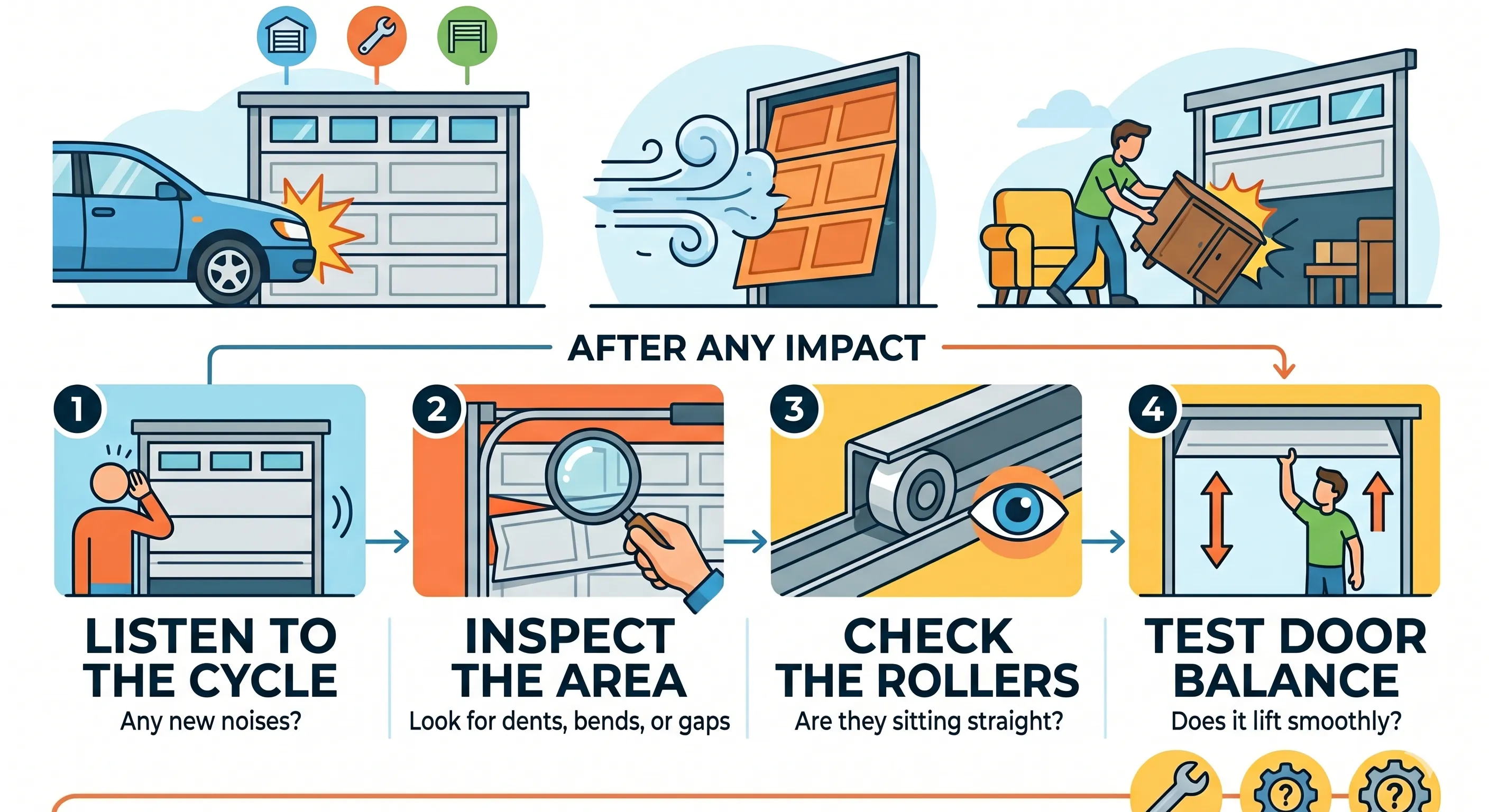
Garage doors take bumps and impacts from time to time. A car that pulls in a little too far, a strong wind that catches the door mid-travel, or an accidental knock from moving furniture through the garage are all common events that can introduce damage that is not immediately obvious.
Even a minor impact can bend a track bracket slightly, dent the track channel just enough to create a friction point, or loosen hardware that was previously secure. Damage that seems cosmetic often has a mechanical effect that shows up later as roller problems.
After any impact to the door or track:
- Run the door through a full open and close cycle and listen carefully for any new sounds
- Inspect the area where the impact occurred for visible dents, bends, or separation
- Check the roller closest to the impact point to see if it is still sitting straight in the track
- Test the door balance using the disconnect method described earlier
Schedule a Professional Maintenance Visit Once a Year
Homeowner inspections and maintenance routines are valuable, but they have limits. A trained garage door technician can see things that are not visible to the untrained eye, catch problems that are not yet producing symptoms, and make adjustments that require specialized tools.
What a professional maintenance visit typically covers:
- Full inspection of all rollers, brackets, hinges, and track hardware
- Spring tension measurement and adjustment if needed
- Cable inspection for fraying, wear, or improper seating on the drum
- Opener force and travel limit adjustments
- Complete lubrication of all moving parts
- Safety reversal and auto-stop testing on the opener
Professional maintenance guidelines recommend annual inspections to identify wear early and ensure all moving components are operating safely and efficiently.
To understand the full picture of what happens when roller maintenance is skipped and problems are left to grow, What Happens If You Ignore a Fallen Garage Door Roller? walks through every stage of escalation in detail.
Choose Quality Replacement Parts When the Time Comes
Not all garage door rollers are built to the same standard. When the time comes to replace rollers, the quality of the replacement parts directly affects how long they will last and how reliably they will perform.
What separates quality rollers from basic ones:
- Sealed ball bearings versus open bearings. Sealed bearings keep lubricant in and contaminants out, which extends service life significantly, particularly in dusty environments like Mesa.
- Nylon wheels versus steel wheels. Nylon rollers are quieter, require less frequent lubrication, and are gentler on the track. They hold up better under heat than many homeowners expect.
- Stem length and gauge. A heavier gauge stem is more resistant to bending under load. The correct stem length must match the door’s bracket configuration.
- Cycle rating. Look for rollers rated to at least 20,000 cycles for residential use. Higher-rated rollers cost more upfront but last significantly longer and reduce how often replacement is needed.
A Little Attention Goes a Long Way
Keeping garage door rollers in place is not about complex repairs or expensive upgrades. It is about consistent attention to a system that works hard every day and responds well to basic care. Regular inspection, proper lubrication, clean tracks, balanced springs, and timely garage door service are the habits that keep rollers on track for years instead of months.
JT’s Overhead Doors helps homeowners in Mesa, AZ build these habits into their regular home maintenance routine, which is one of the smartest investments you can make in your home’s functionality and safety. When you need professional support, whether it is a scheduled tune-up, a roller replacement, or a full system inspection, we are here to help with reliable garage door repair and service. Contact us today or give us a call to set up your maintenance visit.


