
Most homeowners use their garage door several times a day without ever thinking about what is actually making it move. The door goes up, the door comes down, and everything feels effortless. What they do not see is the system of tightly wound springs absorbing and releasing enormous amounts of tension with every single cycle, which is why professional garage door service is so important when problems appear.
Understanding how garage door springs work is not just interesting. It is important. These are not ordinary household components. They operate under extreme mechanical stress, and when something goes wrong, the consequences can be serious. This guide breaks down exactly how the spring system functions, why it carries real danger, and what every homeowner should know before getting anywhere near it.
The Basic Job of a Garage Door Spring
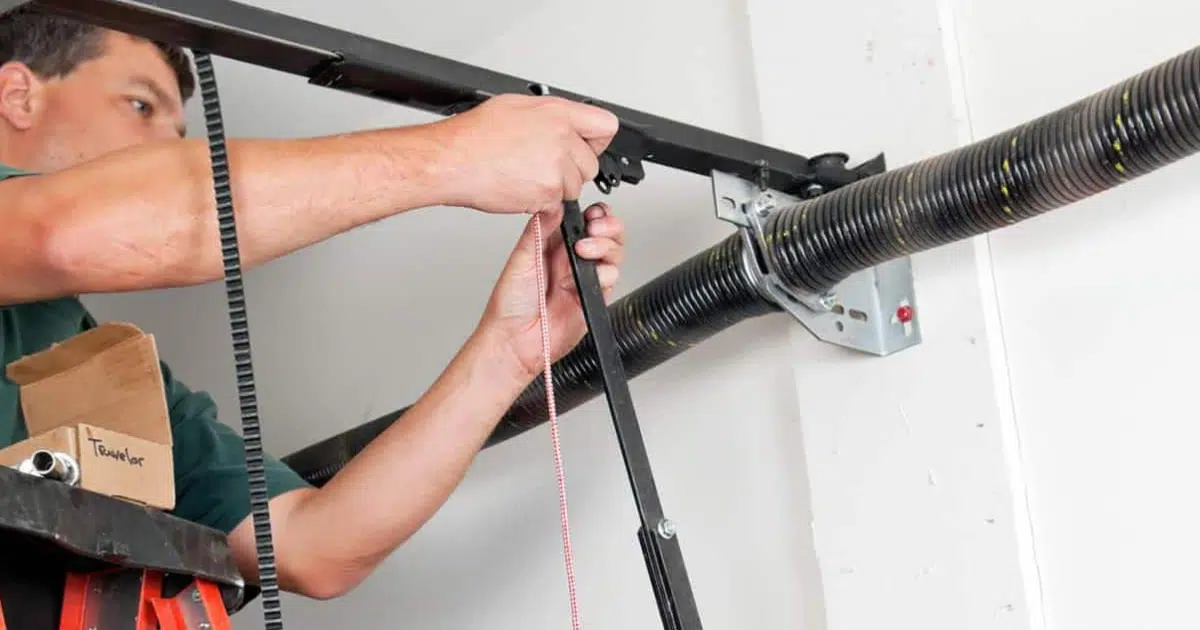
A garage door spring has one primary job: to counterbalance the weight of the door. Without the spring, lifting a garage door manually would require tremendous effort because the door itself, depending on its size and material, can weigh anywhere from 100 to over 400 pounds. Proper broken spring replacement becomes necessary when this counterbalance system fails, and the door can no longer operate safely or smoothly.
Here is how the counterbalance works:
- The spring stores mechanical energy when the door is closed and the spring is under tension
- When the door opens, the spring releases the stored energy to assist the lift
- When the door closes, the spring winds back up and stores energy again for the next cycle
To understand what happens when this system fails unexpectedly, read What Are the Risks of DIY Garage Door Spring Replacement?.
The Two Main Types of Garage Door Springs
Not all garage door springs are the same. There are two primary types used in residential garage doors, and each works differently. Knowing which type your door uses matters because they behave differently, carry different risks, and require different handling.
Torsion Springs
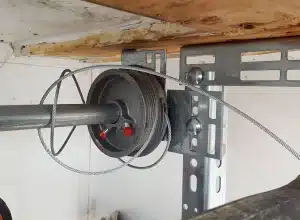
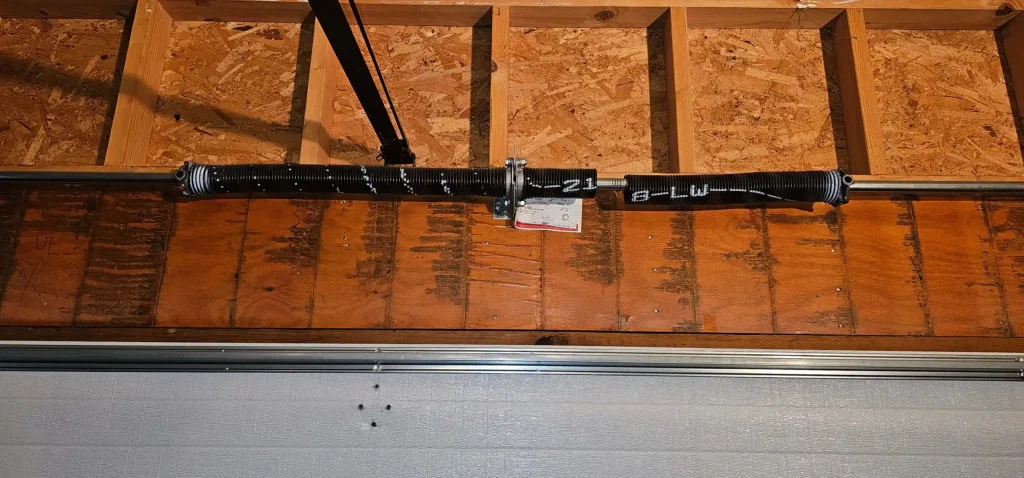
Torsion springs are the most common type in modern residential garage doors. They are mounted horizontally on a metal shaft directly above the door opening. As the door closes, the spring winds up and stores torque. As the door opens, it unwinds and releases that torque to turn the cable drums and lift the door.
Key characteristics of torsion springs:
- Mounted above the door on a steel shaft
- Store energy through rotational force called torque
- Available in single or double spring configurations, depending on door weight
Extension Springs
Extension springs run along the horizontal tracks on either side of the door. Instead of twisting, they stretch and contract to create the lifting force. They are more common in older installations and lighter residential doors.
Key characteristics of extension springs:
- Mounted along the upper side tracks on each side of the door
- Store energy by stretching under tension
- Require safety cables threaded through them to contain fragments if they snap
How Much Tension Is Actually Stored in a Spring
This is the part that surprises most homeowners. The amount of mechanical energy stored in a garage door spring is significant enough to cause serious injury or death if released suddenly and without control. This is not a theoretical risk. It is the reason professional technicians treat spring work with such caution.
To understand the scale of the tension:
- A standard torsion spring can exert hundreds of foot-pounds of torque when fully wound
- Extension springs stretch to lengths that multiply their stored force exponentially
- Even a spring that appears relaxed may still hold residual tension that releases without warning
Why the Spring System Is Considered High-Risk
The garage door spring system is classified as a high-risk mechanical component for several reasons that go beyond simple caution. Industry professionals, safety organizations, and product manufacturers all flag spring work as one of the most dangerous tasks in residential maintenance.
Factors that make spring systems especially hazardous include:
- The tension cannot always be seen or felt before it releases
- Standard household tools are not designed to hold or control spring tension safely
- Springs near the end of their cycle life can snap without visible warning signs
- Improper winding creates uneven stress that causes sudden catastrophic failure
The Underwriters Laboratories Safety Engineering group notes in its review of automatic garage door safety standards that spring systems are among the components requiring the closest attention to load rating and proper installation tolerances. This is why proper installation and professional handling are not optional recommendations. They are engineering requirements.
The Role of Spring Cycles in Long-Term Safety
Every time your garage door opens and closes, that counts as one cycle. Garage door springs are manufactured and rated to handle a specific number of cycles before they reach the end of their useful life. Understanding this helps homeowners recognize when their springs are approaching replacement time.
What you need to know about spring cycles:
- Standard residential springs are typically rated for 10,000 cycles
- High-cycle springs, used in heavy-use applications, can be rated for 20,000 to 50,000 cycles
- A household that opens and closes the door four times per day will reach 10,000 cycles in roughly seven years
Warning Signs That a Spring Is Failing
Knowing the early warning signs of a failing spring gives homeowners in Mesa, AZ a valuable head start before something goes wrong. Most spring failures do not happen without some advance notice. The problem is that the signs are easy to dismiss if you do not know what you are looking for.
Common warning signs of a spring that needs attention:
- The door feels heavier than usual when lifting it manually
- The door opens unevenly or tilts slightly to one side during operation
- You hear a loud popping, creaking, or grinding noise during cycles
- The door stops partway through opening or closing without a clear reason
The Spruce outlines a detailed breakdown of how garage door springs are replaced and what signs indicate a spring has reached the end of its service life. Catching these warning signs early and calling a professional technician can prevent a full spring failure from happening at the worst possible moment.
What Makes Torsion Springs More Dangerous Than Extension Springs
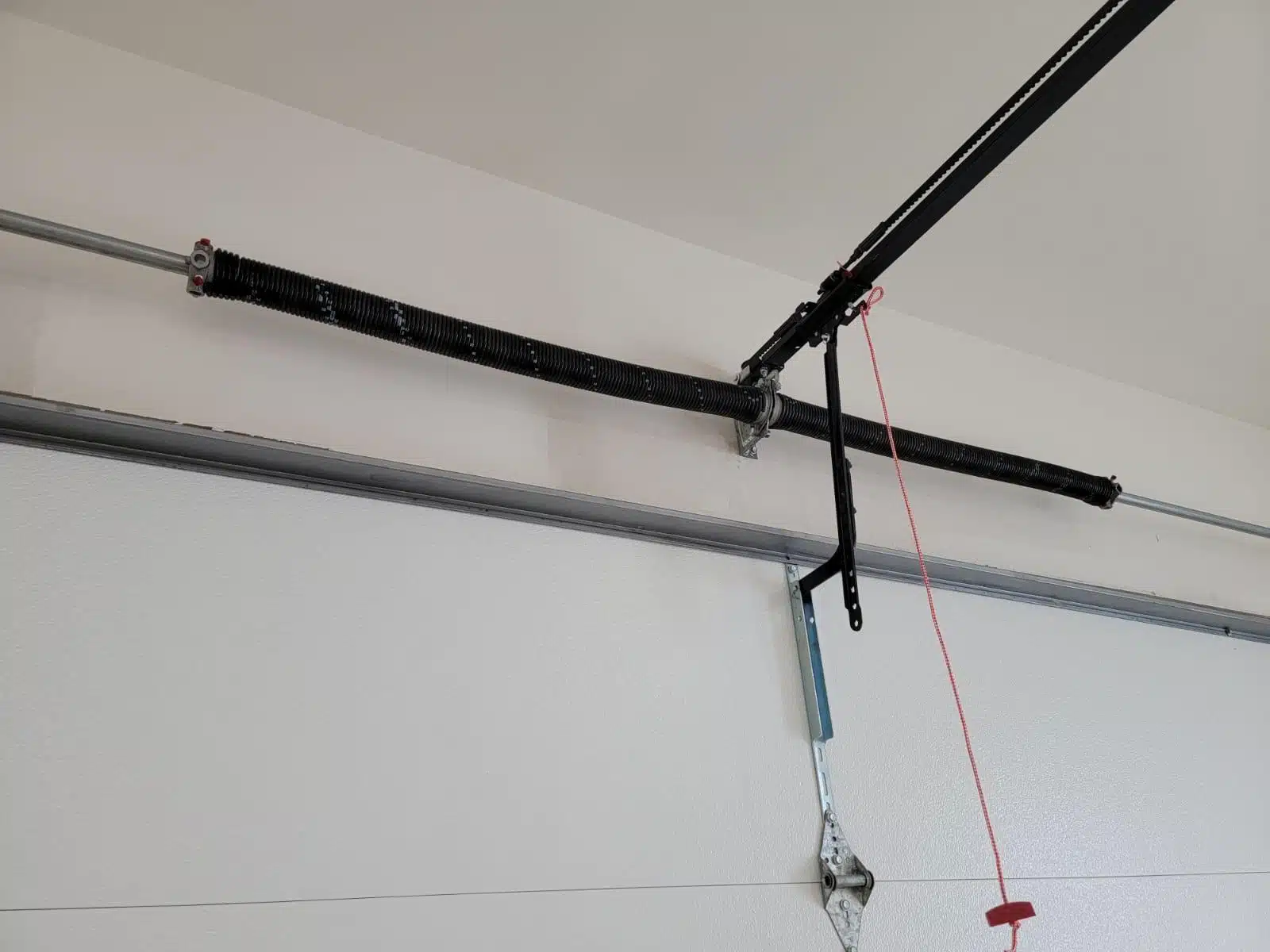
Both spring types carry real risk, but torsion springs present a unique danger profile that homeowners should understand. Because torsion springs store energy through rotation rather than stretching, the way they release that energy when something goes wrong is different and often more sudden.
Here is why torsion springs demand extra caution:
- When a torsion spring breaks under load, the energy releases in a fast rotational snap that can send the broken ends of the spring in unpredictable directions
- The metal shaft the spring sits on can spin violently if the spring breaks during winding or unwinding
- Without a safety cable, a broken torsion spring has nothing to contain its movement
How Professional Technicians Handle Spring Work Safely
Understanding how a trained technician approaches spring work helps illustrate why this is not a job for a homeowner with basic tools. Professionals bring specific knowledge, calibrated equipment, and procedural discipline to every spring job they complete. They also understand how proper garage door maintenance can help identify worn springs early and reduce the risk of sudden failure.
What a professional technician does differently:
- Uses calibrated winding bars that match the exact spring diameter and winding cone size
- Follows a precise winding sequence that controls the release of tension at every step
- Measures door weight and spring specifications before selecting a replacement component
- Tests door balance and opener load after installation to confirm the system is within safe operating range
The Connection Between Springs and Your Garage Door Opener
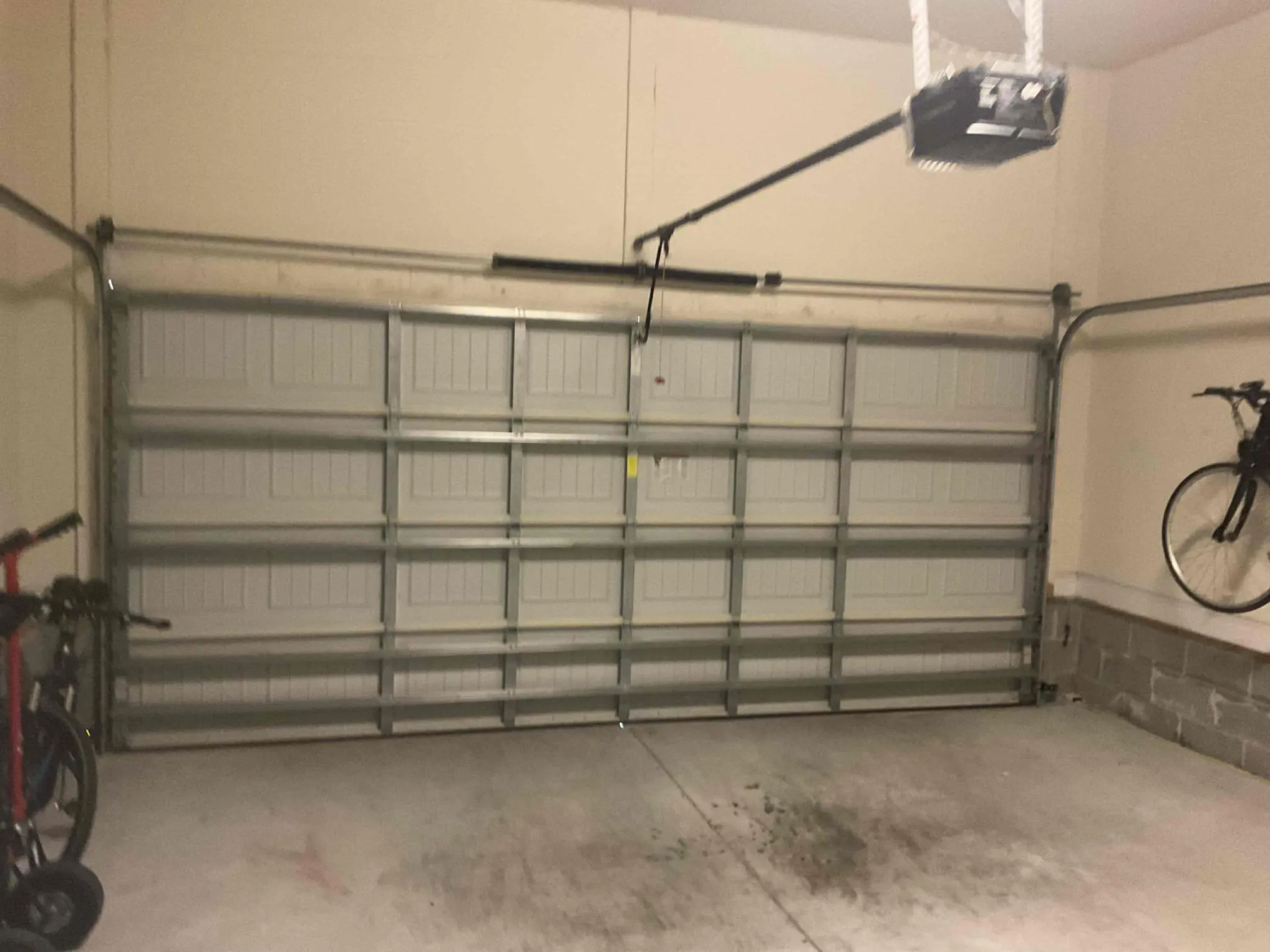
Many homeowners do not realize how closely the spring system is connected to the performance and lifespan of the garage door opener. The opener is designed to operate a door that is already counterbalanced by properly functioning springs. When the springs are failing or incorrectly installed, the opener absorbs the extra load.
How a failing spring affects your opener:
- The motor works harder than it was designed to, generating excess heat
- Drive components, including belts, chains, and gears, wear out faster under the extra strain
- The opener may trigger safety reversals more frequently because the door resistance is abnormal
- In severe cases, a failing spring can cause the opener motor to burn out entirely
Protecting your opener starts with keeping your springs in proper working condition. When one part of the system is stressed, the entire system pays the price over time.
Understanding What Happens When a Garage Door Spring Snaps Suddenly gives a clearer picture of how quickly that chain reaction can unfold.
Why This Knowledge Matters Before You Call Anyone
Being informed about how your garage door spring system works puts you in a better position as a homeowner. You can recognize warning signs early, ask the right questions when a technician arrives, and make confident decisions about repair versus replacement.
What this knowledge helps you do:
- Identify early warning signs before a full failure occurs
- Understand why a technician recommends replacing both springs at the same time
- Avoid being misled by anyone who downplays the complexity or risk of spring work
- Know when a quoted repair is reasonable based on what the job actually involves
Being informed is not the same as being qualified to do the work yourself. The knowledge you have gained here is meant to make you a smarter, safer homeowner, not a spring technician.
For a practical guide on making the right call between repair and replacement, When Should You Replace vs. Repair Your Garage Door Spring? walks you through the full decision-making process.
The Safest Thing You Can Do Is Know When to Call
Garage door springs are a masterpiece of mechanical engineering built into something most people take completely for granted. They work silently, reliably, and efficiently for thousands of cycles. But they also operate under conditions that make them genuinely dangerous when handled without the right knowledge and tools. The tension stored in those coils does not care whether the person handling them is careful or experienced. It releases the same way regardless.
JT’s Overhead Doors provides professional garage door spring inspection, repair, and replacement throughout Mesa, AZ. If your springs are showing warning signs or you simply want the peace of mind that comes from a professional assessment, contact us today or give us a call to schedule a visit.