
It usually starts with a loud bang. Homeowners across Mesa, AZ have described it as a gunshot, a car backfiring, or something heavy falling in the garage. Then they walk in and find the garage door either stuck open, stuck closed, or hanging at an odd angle. A garage door spring has snapped, and everything that was working fine a moment ago has stopped, often requiring immediate professional garage door service to safely inspect and repair the system.
A snapped spring is one of the most disruptive garage door failures a homeowner can experience. It is also one of the most misunderstood. Many homeowners assume the door is still safe to use or that the opener can compensate for the broken spring. Neither is true. This guide explains exactly what happens when a spring snaps, what the immediate risks are, and what steps to take before anyone touches that door.
The Moment a Spring Snaps: What Actually Happens
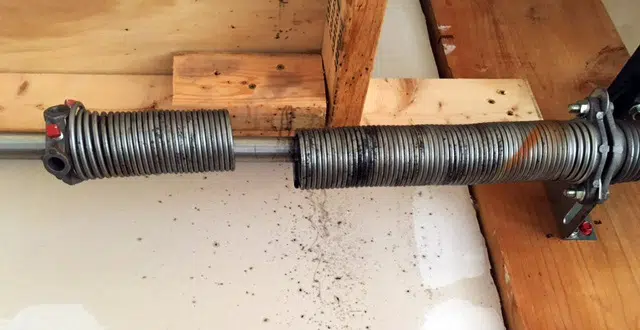
When a garage door spring reaches the end of its cycle life or develops a stress fracture, it does not slowly weaken until it gently gives way. It snaps. The stored mechanical tension inside the spring releases instantly, and the result is both loud and potentially dangerous. In many cases, this is when homeowners realize that broken spring replacement is urgently needed to restore safe operation of the door.
Here is what happens in the moment of a spring failure:
- The coiled metal separates at the point of failure, and the ends snap outward under the force of the stored tension
- The loud bang that homeowners hear is the release of that stored energy, combined with the spring striking surrounding components
- The garage door immediately loses its counterbalance and becomes extremely heavy
Delaying repairs can make simple issues far worse, which is why it’s important to also understand the broader dangers outlined in What Are the Risks of DIY Garage Door Spring Replacement? before attempting any repairs yourself.
Why the Garage Door Becomes Dangerous Immediately After
The moment a spring snaps, the garage door transforms from a convenient entry point into a serious safety hazard. This is not an overstatement. A door without a functioning spring is an uncontrolled weight, and anything or anyone in its path during an unexpected drop is at risk.
Immediate dangers after a spring failure include:
- The door can drop suddenly if the opener releases or loses power
- Manually lifting the door without a spring counterbalance puts extreme strain on your back and joints
- The opener may attempt to continue cycling the door, straining the motor and drive system
- A door that is partially open and unsupported can shift and fall without any trigger
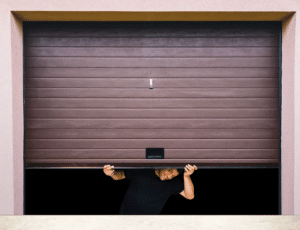
Many homeowners in Mesa, AZ, make the mistake of trying to manually open the door after a spring snaps, especially when a vehicle is trapped inside. This is one of the most dangerous responses possible. The door can weigh several hundred pounds without the spring, and losing grip mid-lift puts everyone nearby at serious risk.
What the Sound Tells You About the Type of Failure
Experienced garage door technicians can often identify the type of spring failure and its severity based on what the homeowner describes hearing. Understanding these distinctions helps homeowners communicate more accurately when they call for service.
What different sounds typically indicate:
- A single sharp bang followed by silence usually points to a torsion spring snapping at a single point
- A series of pops or cracks may indicate an extension spring failing progressively along multiple stress points
- A grinding or scraping sound after the bang suggests the broken spring or its components made contact with the door panel or track
How a Broken Spring Affects the Garage Door Opener
One of the most damaging mistakes homeowners make after a spring snaps is continuing to use the automatic opener. The opener was engineered to move a door that is already counterbalanced by functioning springs. Without that counterbalance, the opener is doing all of the work on its own.
The damage a broken spring causes to the opener includes:
- The motor runs at maximum load, trying to lift the full unassisted weight of the door
- Drive components, including chains, belts, and trolleys, experience accelerated wear from the extra strain
- The opener’s internal circuit board may trigger fault codes or shut down entirely as a safety response
- Repeated cycles with a broken spring can burn out the motor in a relatively short period
The Door and Access Systems Manufacturers Association provides clear garage door safety guidelines that specifically address why operating a door with a broken spring puts both the opener and the people using it at risk. Disconnecting the opener immediately after a spring snaps is one of the most important protective steps a homeowner can take.
The Risk to Your Vehicle and Property
A snapped garage door spring does not only affect the door itself. The sudden loss of counterbalance creates a chain reaction of risks that can extend to everything inside and around the garage. Homeowners with vehicles parked under or near the door are at particular risk.
Property damage scenarios that follow a spring failure include:
- A door that drops suddenly can land on the roof or hood of a vehicle parked in the opening
- The door panels themselves can bend or crack if the door falls at an uneven angle
- Tracks can warp from the sudden uncontrolled weight shift, requiring full track replacement
- Cable drums can be damaged or pulled out of alignment when a spring snaps mid-cycle
What to Do the Moment You Realize a Spring Has Snapped
Knowing exactly what to do in the minutes after a spring failure can prevent a bad situation from becoming significantly worse. The steps below are what professional technicians recommend to every homeowner who calls them after a spring breaks.
Immediate steps to take after a spring snaps:
- Do not attempt to open or close the door manually or with the opener
- Locate the emergency release cord on the opener, usually a red cord hanging from the rail, and pull it to disconnect the door from the opener
- Keep the garage door in whatever position it is currently in, whether open or closed, until a technician arrives
- Keep all family members and pets clear of the garage door area
The Spruce provides additional detail on garage door care and maintenance that includes guidance on recognizing spring failures and responding safely before professional help arrives. Taking these steps protects your property and everyone in your household while you wait for service.
How to Safely Get Your Vehicle Out If the Door Is Closed
One of the most frustrating scenarios after a spring snaps is finding yourself with a vehicle trapped inside a closed garage and no safe way to open the door. This situation comes up regularly, and there is a right way and a very wrong way to handle it. In many cases, proper garage door maintenance could have identified worn springs before they failed unexpectedly.
Safe options for accessing your vehicle after a spring failure:
- Call a professional technician for emergency service. Most garage door companies offer same-day or emergency response for exactly this situation.
- If the door has a manual lock or side entry door, use those access points rather than attempting to lift the main door
- Some technicians can safely lift the door manually with proper equipment and training for a retrieval while they wait to complete the full repair
What you should not do under any circumstances:
- Do not attempt to lift the door alone or with another untrained person
- Do not use a pry bar, rope, or any improvised lifting method on the door panels
- Do not try to re-engage the opener to force the door open
Secondary Damage You May Not Notice Right Away
When a spring snaps, the immediate and visible damage is usually obvious. What is less obvious is the secondary damage that may not become apparent until days or weeks later. Homeowners who have a spring replaced without addressing secondary damage often find themselves calling for service again sooner than expected.
Hidden damage to inspect for after a spring failure:
- Cable fraying or unspooling from the cable drums on either side of the door
- Misaligned or bent tracks caused by the sudden weight shift during the failure
- Worn or cracked rollers that were stressed by the abnormal load at the moment of failure
- Opener drive components that were strained during any cycles run after the spring broke
A thorough technician will inspect these components as part of the spring replacement visit. If a technician only addresses the spring without checking the surrounding hardware, ask them specifically to inspect cables, drums, and tracks before the job is considered complete.
Understanding the full scope of what a spring failure can trigger is covered in detail in How Garage Door Springs Work and Why They’re Dangerous.
How Long Does It Take to Replace a Broken Spring
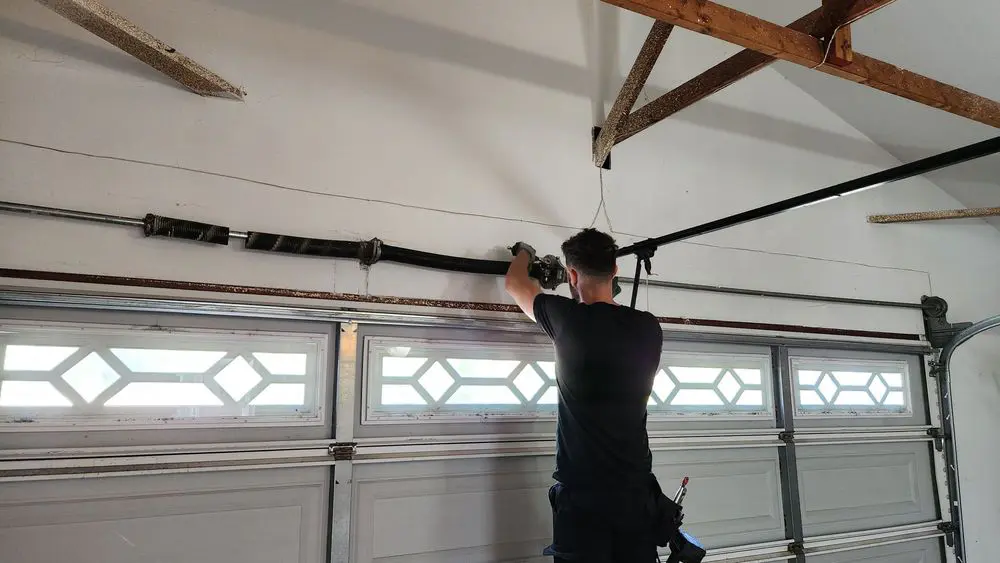
One of the first questions homeowners ask after a spring break is how long they will be without a functioning garage door. The answer depends on a few variables, but in most cases, a professional spring replacement is completed in a single visit.
Typical timeline for a professional spring replacement:
- A straightforward torsion spring replacement on a standard residential door takes most technicians between 45 minutes and two hours
- Extension spring replacements are generally faster because the hardware is more accessible
- If secondary damage is found during the inspection, repairs to cables, drums, or tracks will add time to the visit
Why Acting Quickly Protects Your Entire Garage Door System
Waiting too long after a spring snaps is one of the most common and costly mistakes homeowners make. The longer a garage door operates without a functioning spring, or sits in an unbalanced state, the more stress accumulates on every other component in the system.
Reasons to schedule a repair as soon as possible after a failure:
- The second spring in a dual-spring system is now under extra stress and likely to fail soon
- Cables and drums continue to experience abnormal load with every attempted cycle
- The opener motor degrades faster when it is running without spring assistance
- A door left in an unsecured open position creates a security vulnerability for your home
For guidance on whether your situation calls for a full replacement or a targeted repair, When Should You Replace vs. Repair Your Garage Door Spring? walks through exactly that decision.
A Snapped Spring Demands Immediate, Professional Attention
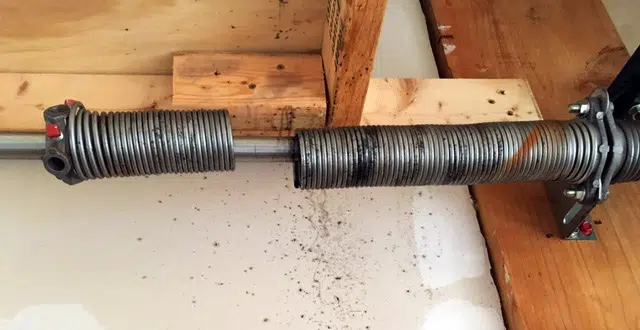
A garage door spring failure is not a problem that gets better with time or resolves itself. The moment that spring snaps, the clock starts on a series of consequences that grow more serious and more expensive the longer they go unaddressed. A snapped spring is a clear and urgent signal that professional service is needed today, not next week.
JT’s Overhead Doors provides prompt, professional garage door spring repair and replacement throughout Mesa, AZ. If your spring has snapped or your door is showing signs of spring failure, contact us today or give us a call, and we will get your door back in safe, working order as quickly as possible.