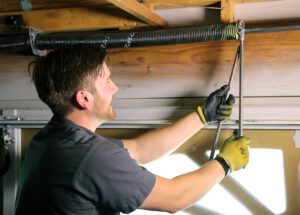


Garage door springs play a critical role in supporting the door’s weight and controlling its movement. Whether the system uses torsion springs mounted above the door or extension springs positioned along the sides, both types operate under significant tension during every open and close cycle.
Why Garage Door Springs Can Wear Down Over Time
- Garage door springs balance the door’s weight to support smooth movement.
- Torsion springs sit above the door, while extension springs run along the sides.
- Both spring types remain under constant tension during operation
- Repeated door movement gradually increases mechanical stress on the springs
- Environmental conditions can influence how springs respond over time
- Ongoing wear can reduce spring strength and overall door balance
- Sudden stress or accumulated fatigue may cause a spring to fail unexpectedly
As spring strength decreases, the garage door can become harder to control and less stable during operation. Recognizing how and why springs weaken helps explain when garage door repair may be needed to address safety concerns and restore proper performance across the entire garage door system.
Mechanical Factors That Lead to Garage Door Spring Repair
Garage door springs operate under constant tension as they support the door through repeated opening and closing cycles, and this ongoing stress gradually weakens the spring over time. As tension decreases, the door may begin to feel heavier, move unevenly, or produce unusual sounds, signaling that spring-related strain is affecting the door’s overall performance and reliability.
For more insight into timing and warning signs, explore our related blog, When Should Garage Door Spring Repair Be Considered?
Gradual Loss of Tension From Repeated Door Movement
Garage door springs work under constant tension as the door opens and closes throughout daily use. Over time, this repeated motion places ongoing strain on the spring, gradually reducing its ability to support the door’s weight.
- Springs are designed to handle a limited number of door cycles
- Repeated winding and unwinding weaken the metal over time
- Loss of tension causes the door to feel heavier during operation
- Uneven movement may appear as spring strength declines
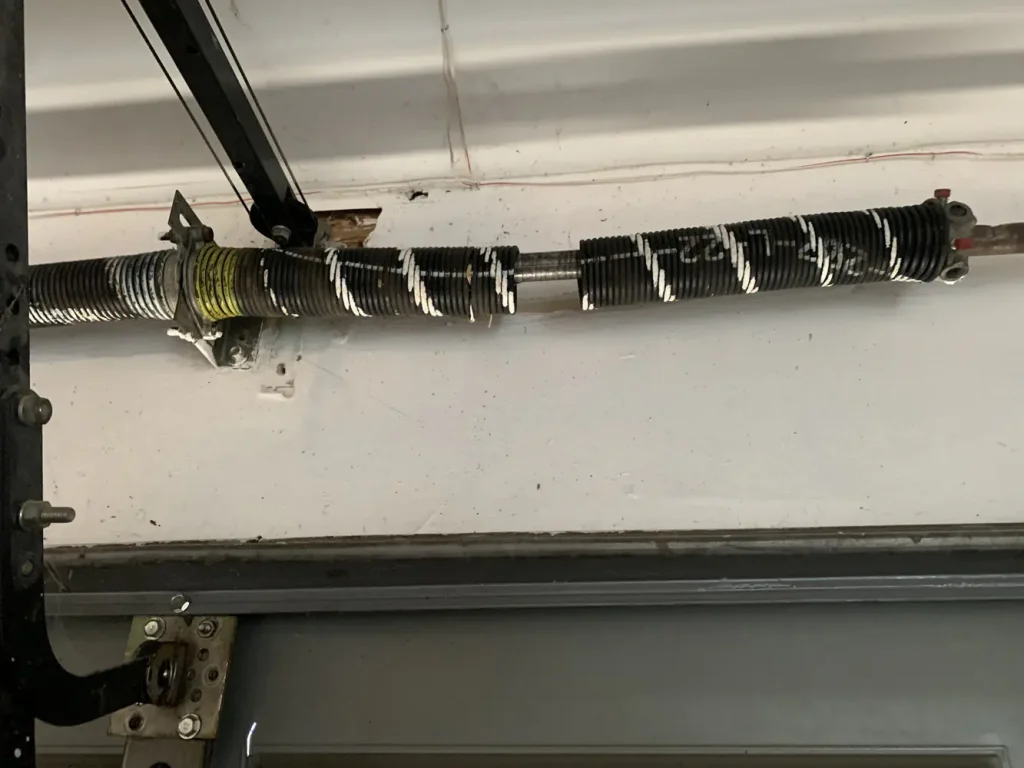
- Advanced wear can result in visible separation within the spring
As tension continues to decrease, the spring becomes less effective at balancing the door, increasing stress across the entire garage door system.
Structural Weakening Caused by Long-Term Metal Stress
Garage door springs are exposed to continuous mechanical force throughout their lifespan. Whether twisting or stretching, this ongoing stress slowly affects the strength of the metal.
- Torsion springs endure repeated twisting forces.
- Extension springs are stretched and released with each cycle
- Ongoing stress leads to gradual mental fatigue
- Internal cracking can develop without visible warning
- Springs may function normally even as strength declines
This gradual weakening explains why springs can fail unexpectedly after years of use.
Imbalance Created by Uneven Load Distribution
Garage door springs are designed to work together to evenly support the door’s weight. When this balance is disrupted, strain increases across the entire system.
- Paired springs divide the door’s weight evenly
- A weakened spring forces the remaining spring to carry an extra load
- Uneven tension accelerates wear on springs and related components
- Door movement may become misaligned or unstable
- Cable tension can appear uneven from side to side
When load distribution is uneven, overall door stability is reduced, increasing the risk of further mechanical issues and situations that may require garage door emergency service to prevent unsafe operation.
Environmental Conditions That Affect Garage Door Springs
Garage door springs are constantly exposed to changing weather conditions, which can gradually weaken their strength over time. Moisture in the air can lead to corrosion, while repeated shifts between hot and cold temperatures cause the metal to expand and contract, increasing internal stress. Dirt and airborne debris can also collect on the springs, adding to wear and accelerating the loss of tension and overall performance.
To better understand how these changes affect operation, read our related post, How Garage Door Spring Repair Impacts Door Movement?
Moisture Exposure Contributing to Surface Degradation
Garage door springs are frequently exposed to moisture from rain, humidity, and damp air. Over time, this exposure affects the surface of the metal and reduces its structural strength.
- Moisture settles on spring surfaces and between coils
- Prolonged exposure leads to corrosion and rust formation
- Rust creates weak points within the metal structure
- Corroded areas reduce flexibility and load tolerance
- Small rust patches can trigger cracking or sudden failure
As surface degradation progresses, the spring becomes less capable of handling daily movement, increasing the risk of unexpected loss of function.
Temperature Fluctuations Altering Spring Performance
Garage door springs respond continuously to changes in outdoor temperature. Repeated shifts between hot and cold conditions place added stress on metal already under high tension.
- Heat causes metal to expand, altering spring tension
- Cold temperatures make steel more rigid and brittle
- Expansion and contraction occur with each seasonal change
- Repeated cycles contribute to long-term metal fatigue
- Performance changes may appear without visible damage
Over time, these temperature-driven changes weaken the spring’s internal structure, making it more vulnerable to failure during normal operation.
Airborne Debris Accelerating Spring Wear
Particles carried through the air can gradually collect on garage door springs, especially in open or exposed garage spaces. This buildup interferes with normal spring movement and increases wear.
- Dust and dirt increase the friction between spring coils
- Sand and fine debris can grind against protective coatings
- Salt particles encourage corrosion in humid environments
- Organic debris may restrict smooth coil movement
- Debris buildup can amplify noise and resistance during operation
As debris accumulates, added friction and corrosion place extra strain on the spring, speeding up wear and reducing overall system reliability, which can signal the need for timely garage door service to maintain proper operation.
Installation and Design-Related Causes of Spring Failure
Garage door spring failure can sometimes be traced back to issues present from the initial installation rather than gradual wear. When springs are incorrectly sized, misaligned, or not suited to the door’s design, they are placed under unnecessary strain from the start. This added stress accelerates wear and can lead to early performance issues, increasing the likelihood of spring-related problems appearing much sooner than expected.
To see how delaying attention can worsen these issues, explore our related blog, What Happens When Garage Door Spring Repair Is Delayed?
Inaccurate Spring Sizing Relative to Door Weight
Correct spring sizing is essential for maintaining proper door balance and smooth movement. Springs must match the door’s weight and dimensions to function as intended.
- Springs are designed to counterbalance a specific door weight
- Undersized springs remain under constant strain during operation
- Oversized springs can disrupt smooth door movement and balance
- Incorrect sizing increases stress on springs and connected components
- Imbalance from poor sizing accelerates overall system wear
When spring strength does not match door weight, added strain shortens spring lifespan and increases the risk of early failure.
Improper Alignment Within the Door System
Garage door springs must be positioned and aligned correctly to distribute force evenly. Misalignment affects how the door travels along the tracks and increases mechanical stress.
- Misaligned springs cause uneven lifting during operation
- Uneven force places strain on cables, drums, and rollers
- Crooked movement increases resistance along the tracks
- Added friction forces the spring to work harder than designed
- Ongoing misalignment accelerates wear across the system
Poor alignment places continuous pressure on the spring, making early breakdown more likely.
Incompatibility Between Spring Type and Door Design
Garage doors rely on spring types that match their size, weight, and structural layout. Using an incompatible spring design disrupts balance and increases mechanical strain.
- Torsion springs provide controlled lifting from above the door
- Extension springs operate by stretching along the sides
- Door size and weight influence which spring type is suitable
- Incompatible springs experience uneven or excessive tension
- Mismatched designs reduce system stability and efficiency
When the spring type does not suit the door design, performance declines, and spring wear accelerates, which can also affect how related components, such as garage door keypads, function within the overall garage door system.
Operational Stress That Increases the Need for Spring Repair
Beyond mechanical issues and environmental conditions, daily garage door use plays a major role in how quickly springs wear down. Frequent operation, added strain from door weight, or sudden force can place excessive stress on the spring, accelerating fatigue and increasing the chance of failure. Understanding how these usage-related factors affect spring performance helps explain why spring issues can develop and how they impact the overall garage door system.
High-Frequency Door Usage Increasing Mechanical Demand
Garage door springs are designed to operate within a set range of movement cycles. Frequent daily use increases how often springs are placed under tension, accelerating natural wear.
- Each door opening and closing counts as a full spring cycle
- Higher daily usage causes faster metal fatigue
- Repeated motion reduces spring strength over time
- Worn springs provide less lifting support
- Increased strain affects the overall door balance
As cycle limits are reached sooner, springs may weaken faster than expected, increasing the likelihood of performance issues.
Excessive Door Weight Straining Spring Capacity
Garage door springs are calibrated to support a specific door weight. When the door becomes heavier, springs must work harder to lift and control movement.
- Springs are engineered for a defined weight range
- Added weight increases constant tension on the springs
- Excess load accelerates metal fatigue
- Springs lose balance efficiency under added strain
- Long-term overload shortens the spring lifespan
When spring capacity is exceeded, stress builds quickly, making failure more likely over time.
Sudden Force or Impact Disrupting Spring Balance
Unlike gradual wear, sudden force can cause immediate spring failure. Sharp impacts place extreme stress on springs in a very short period.
- Abrupt force applies shock directly to the spring system
- Metal may fail instantly without visible warning
- Stored tension releases suddenly when a spring breaks
- Door balance is immediately lost
- Door movement becomes difficult or unstable
Because the system relies on balanced tension, sudden force can create immediate safety and control concerns within the garage door system.
Why Identifying the Causes of Garage Door Spring Problems Matters
Understanding what causes garage door spring problems is essential for maintaining safe and reliable door operation. Mechanical wear, environmental conditions, and daily usage all contribute to gradual spring breakdown, and recognizing these factors early helps reduce the risk of sudden issues while supporting smoother, more consistent garage door performance over time.
For homeowners looking for dependable guidance and careful workmanship, JT’s Overhead Doors is known for a straightforward, safety-focused approach to garage door care. Our team emphasizes clear communication and thorough evaluations to help address spring-related concerns before they lead to larger system issues. If you want confidence in how your garage door is performing, contact us today or give us a call to schedule an inspection and keep your door operating smoothly and securely.